

Every carrier knows the moment it’s coming. December 25 lands. Millions of boxes get opened across the country, and the activation volume climbs through the afternoon. By December 26 the inbound queue to the carrier’s call center is deep, and the pattern holds through New Year’s Day. Holiday device activation is one of the most predictable support spikes of the year. It’s still one of the least well-handled across the industry. Carriers who plan for it specifically absorb the volume cleanly. Those who treat it as general support volume end up with wait times that make the news. Nobody wants a cable-news story about three-hour hold times on Boxing Day. Social media amplifies the pain within hours of the first wait complaint going viral.
I’ve spent a lot of years working alongside carrier operations teams and the specialist call center telecom partners who scale their support for peak events like this one. The failure modes repeat across operators pretty consistently. Retail systems and network systems don’t talk to each other cleanly during the activation flow. Billing systems lag the activation by hours in some cases. Agents who normally handle service calls end up walking subscribers through activation steps they weren’t trained for last December. The spike exposes every seam that was already there in the service model. By January each year, operations leads have the same list of fixes queued up for Q3 that didn’t make it last time.
- Why Holiday Device Activation Volume Breaks Carrier Support Systems
- The Handoff Between Retail, Network and Billing That Stalls Activations
- What Holiday Device Activation Training Should Cover Beyond the Script
- The Specific Scripts That Work on a Frustrated Gift Recipient’s Call
- How to Measure Whether Holiday Device Activation Operations Delivered
- Keep Reading CX Excellence World for More Telecom Peak Season Insights
- Holiday Device Activation FAQ: Five Questions Carriers Ask Me Most
Why Holiday Device Activation Volume Breaks Carrier Support Systems
The structural reason holiday device activation overwhelms carrier support is that the volume doesn’t spread evenly across the week. It compresses into about 72 hours. December 25 afternoon through December 27 evening carries the bulk of the activations. A carrier that handles 15,000 activations on a normal Tuesday can see 90,000 or more across that window. The call center that supports those activations typically runs on maybe 1.5 times normal staffing. The math doesn’t work. Wait times climb, abandonment climbs, and subscribers who gave the device as a gift start wondering whether they picked the right carrier.
Industry research has tracked the activation spike for years. One useful piece on Christmas Day smartphone activations walks through the specific volume dynamics across carriers. The piece is a few years old now. The pattern it describes has only intensified as device prices have climbed. A $1,200 phone that fails to activate properly on Christmas afternoon generates a very different support interaction than a $200 phone did 10 years ago. Emotional stakes are higher. Subscriber tolerance for friction is lower.
The Handoff Between Retail, Network and Billing That Stalls Activations
Specific friction behind failed holiday device activation usually clusters at the handoff between internal systems. Retail activation completes in the store or online. Network provisioning hasn’t propagated yet. The subscriber tries to make a call and nothing happens. They contact support. An agent sees the activation in the retail system but can’t find the network status. Billing hasn’t picked up the activation yet, so the account looks unassigned. Three internal systems disagree about whether the device is actually active. Agents have to resolve the conflict on a call while the subscriber waits.
The operational fix is a tighter integration between the three systems and a specific escalation path for activation cases. Carriers who’ve invested in real-time propagation between retail, network provisioning and billing resolve activation cases in under five minutes on average. Carriers running batch propagation on 15-minute or hourly intervals routinely run 20-plus-minute calls on the same cases. The investment in real-time propagation looks expensive in isolation. The ROI runs through reduced handle time, lower abandonment, and the retention protection on brand-new accounts.
What Holiday Device Activation Training Should Cover Beyond the Script
Agents handling holiday device activation calls need training that goes beyond the standard new-service script. Specifically, they need to know how to read the propagation state across all three internal systems. Authority to force a resync when the systems have diverged. Specific language that calms a subscriber who’s been on hold for 40 minutes with a dead phone sitting in front of them. The escalation path that gets to a technical specialist when the propagation fails. All of this is teachable. It has to be taught before December 20, not improvised on December 26 when the queue is already deep.
The training cadence works best as a focused seasonal refresh rather than an everyday-skills topic. Three weeks before Christmas, every agent who might take activation calls runs through a specific module. Common failure modes, system quirks that showed up during the previous year’s spike, and the specific scripts that work for frustrated gift recipients. One useful breakdown of the device activation volume patterns and what carriers learn from them each year covers the macro-level data that justifies the training investment to leadership. Teams who run the refresh cut average handle time by 25 to 40% during peak compared to teams who skip it.
The Specific Scripts That Work on a Frustrated Gift Recipient’s Call
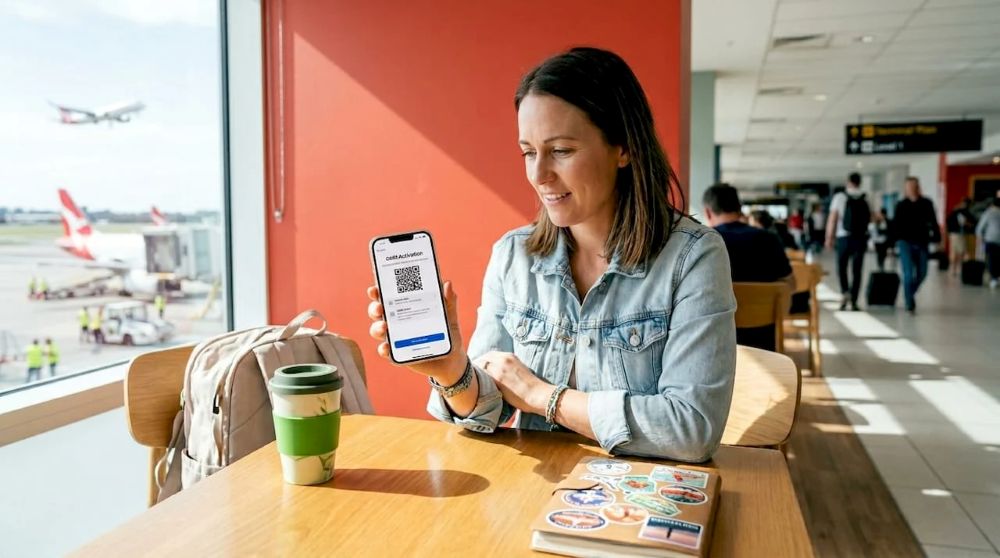
Scripts for holiday device activation calls have to meet the subscriber where they are. The caller usually isn’t the account holder. They’re the gift recipient. The person who bought the phone is standing next to them trying to help. There may be young kids in the background. The subscriber already tried the obvious troubleshooting steps before calling. They’ve been on hold. The last thing they want is the standard new-customer script. For teams building these capabilities within broader service standards, network reliability support covers the operational framework in more detail. Agents who open with acknowledgement and move fast to resolution outperform agents who follow the standard flow.
The specific opening matters. Something like, “I know this isn’t how you wanted to spend Christmas afternoon, let me get this moving for you right now,” lands differently than, “Thank you for calling, how can I help you today?” The first version acknowledges reality and signals urgency. The second version is appropriate for 95% of calls, but not for this one. Agents who make the switch instinctively were either trained to or have been through enough holiday seasons to know. The training approach gets more agents to the right behavior faster than experience alone.
How to Measure Whether Holiday Device Activation Operations Delivered
The measurement for holiday device activation peak performance needs a specific stack. Average handle time on activation cases through the peak window. First-contact resolution specifically on activation calls. Abandonment rate during the three-day peak. Subscriber-reported satisfaction on activation calls through a brief post-call survey. Account retention at 30, 60 and 90 days for subscribers whose activation call went poorly. Each metric catches a different operational signal. Together they tell leadership whether the peak season investment actually paid back or just produced the usual round of complaints disguised as general support volume. One carrier I worked with ran this full measurement stack across a single peak and found that abandonment on activation calls was running three times higher than general support abandonment. That insight shifted the following year’s staffing plan meaningfully.
The retention metric is the one that usually surprises carriers. Subscribers whose first support experience with the carrier went poorly churn at meaningfully higher rates through the first year of the account than subscribers whose first experience was smooth. The specific lift varies by carrier, but the direction is consistent. Protecting the first-call experience during the activation window has a payback that runs well past the peak, into the long-term account value calculation. That’s the number that justifies the operational investment to leadership who care about lifetime value rather than quarterly handle time.
Keep Reading CX Excellence World for More Telecom Peak Season Insights
If you’re building the plan for next December right now, there’s time to tighten the activation workflow before the volume hits again. Holiday device activation is one of the few peak events that’s genuinely predictable. The predictability rewards carriers who prepare specifically for it. Three or four operational changes in Q3 of the next year produce visibly better outcomes in late December. The specific changes vary by carrier, but the preparation window stays consistent across the industry. There’s more at CX Excellence World on telecom peak-season operations, system integration patterns, and the measurement work that keeps peak performance honest across multi-year horizons.
Carriers who get this right share a few habits. Real-time propagation between retail, network and billing instead of batch intervals that lag the activation. Specific seasonal training for agents three weeks before Christmas rather than general new-service curriculum. Scripts that meet gift recipients where they are instead of defaulting to the standard new-customer flow. Measurement that spans the peak window and the post-peak retention curve. These disciplines compound across a single peak season and set up the next one too. Documentation from each year’s peak feeds into the planning cycle for the following year, so improvements build rather than reset.
The carriers I’ve seen handle holiday device activation best treat it as a specific operational event, not a generic volume spike. An owner for the peak gets named early. Previous year’s data gets reviewed in September. System integrations get tested in November. By December 25 the plan is already running. Subscribers who got a new phone under the tree don’t notice the operational work that made their activation go smoothly. Come read the detail before the next planning cycle locks in another year of improvised peak-season response that quietly damages new-account retention.
Holiday Device Activation FAQ: Five Questions Carriers Ask Me Most
1. When does the holiday device activation spike actually peak?
December 25 afternoon through December 27 evening in most markets, with secondary spikes around New Year’s Eve and the first week of January as gift recipients get around to activating devices they received but didn’t open immediately.
2. How much extra staffing does a typical carrier need for the peak window?
Volume typically runs five to six times a normal Tuesday across the three-day peak. Pure headcount matching isn’t practical for most carriers, so the operational plan combines moderate staffing lift with system integration improvements that reduce average handle time on activation cases.
3. Can self-service activation flows handle the peak alone?
They can handle most of it, if the flows are tested specifically for peak conditions. The cases that fall out of self-service to the call center tend to be the hardest ones, which is why the agent-side preparation still matters even when self-service adoption is high.
4. What’s the single highest-impact investment carriers can make?
Real-time propagation between retail activation, network provisioning and billing. The handoff between those three systems causes the majority of failed activations that reach the call center. Fixing it shortens handle time, lifts first-contact resolution, and reduces the agent-side friction that drives early-tenure churn.
5. Should peak-season agents be dedicated or shared with general support?
Dedicated usually produces better outcomes, if the volume supports it. Dedicated agents build pattern recognition on activation cases that general support agents can’t match in a three-day window. Carriers running mixed queues can get similar outcomes with proper seasonal training.