
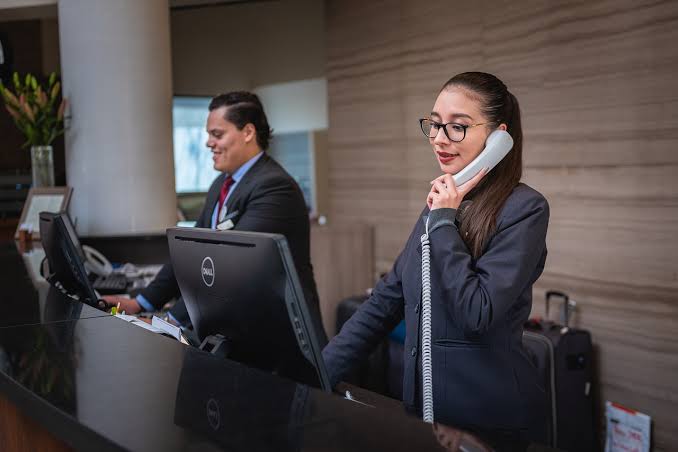
A guest in Room 412 needs extra towels at 3:30 p.m. on Tuesday. She calls the front desk. That is the number listed next to the phone. The front desk agent takes the request, writes it on a sticky note. She intends to pass it to housekeeping on the next radio check-in. Twenty minutes later the agent is handling three check-ins and a billing dispute. The sticky note has migrated under a stack of invoice stubs. The towels do not arrive until 6:15. By then the guest has called twice more and left a note at the desk on her way to dinner. That is the operational shape of in-stay request routing in most independently operated hotels I have advised across the Northeast. It is the specific pattern that produces the single-star review mentioning service failures nobody at the property fully understands.
The gap is not about effort. The front desk agent was trying to help. The housekeeping team was working. Nobody chose to let the towels wait. What failed was the routing itself. The request landed on a system built for reservations. It had to be manually relayed into a system built for housekeeping. The manual relay broke under pressure. Closing that gap is where a serious hospitality call center services partner earns its keep. The fix is not training the front desk to try harder. The fix is building a routing layer that carries in-stay requests directly to the owning department. This piece walks through how to do that.
- Why In-Stay Request Routing Lands on the Wrong Technology Stack by Default?
- How In-Stay Request Routing Breaks Down in Real Hotel Operations
- The Real Cost Behind Poor In-Stay Request Routing in Hospitality
- How to Rebuild In-Stay Request Routing Without Replacing All Your Technology
- Frequently Asked Questions About In-Stay Request Routing Operations
Why In-Stay Request Routing Lands on the Wrong Technology Stack by Default?
The technology stack in most independent hotels was built in layers over fifteen years, and in-stay requests sit on top of layers that were never designed for them. The reservation system handles bookings. The property management system handles check-ins and billing. The housekeeping system handles room status and cleaning schedules. The maintenance system handles tickets. Each of these systems works well for its primary purpose. None has in-stay requests as a native workflow. Requests arrive by phone to the front desk. The desk has to relay them manually into whichever downstream system can actually act.
The manual relay is where things break. Industry analysis of hotel guest messaging operations documents that hotels with structured communication protocols achieve 23 percent higher guest satisfaction scores. They also see 17 percent fewer operational errors compared with properties running fragmented systems. The gap between those two groups is largely the gap between direct routing and bouncing every request through the front desk first.
This ties into how customer support bottlenecks develop when systems treat parallel work as sequential. The front desk is being used as a universal routing hub for workflows that would run better going directly to the owning team. Every manual handoff adds latency. Every latency adds risk of the request getting dropped. Every dropped request becomes a review complaint costing more than the original request would have cost to fulfill.
How In-Stay Request Routing Breaks Down in Real Hotel Operations
The breakdown pattern is consistent across the operations I have advised. It follows four predictable stages. Stage one is the request arrival. The guest calls, texts, or walks to the front desk with a need. The agent receives the request. So far the model is working. Stage two is the relay. The agent has to translate the request into whichever downstream workflow actually owns it. This is where latency gets introduced. If housekeeping is on a radio check-in cycle every fifteen minutes, the request waits for the next check-in. If maintenance is working another room, the ticket waits for the current job to finish.
Stage three is the fulfillment. The owning department receives the relay and acts on it. In a well-functioning operation this stage is fast. In a fragmented operation it is slow. The relay often arrives without full context. The fulfilling team has to call back for clarification. Stage four is the confirmation. In most operations this stage simply does not happen. The guest does not know whether the request was received. Or when it will be fulfilled. Or whether anything has changed since the original call. The uncertainty itself becomes a secondary friction point. The review mentions the uncertainty as much as the eventual outcome.

The Real Cost Behind Poor In-Stay Request Routing in Hospitality
The cost lands in four places, and only one of them is visible on the standard operations report. The measured cost is the number of guest complaints logged formally. That number sits on a dashboard somewhere. It gets flagged when it crosses a threshold. The three unmeasured costs are much larger. First, the reviews that reference routing failures without calling them that. This ties into how measuring service performance requires metrics that reflect operational reality. A guest who writes ‘had to call three times to get towels’ is describing a routing failure. But the review goes into the aggregate satisfaction score. It never gets categorized by root cause.
Second, the compound effect. A guest whose first in-stay request was handled poorly is more likely to notice and complain about the next thing that goes slightly wrong. The initial routing failure sets the tone for the rest of the stay. The aggregate cost of that sentiment shift is far larger than the cost of the original request would have been to fulfill cleanly. Third, the front desk opportunity cost. Every minute the front desk spends relaying in-stay requests is a minute not spent on check-in, up-sell, or arrival experience work. The displacement cost is real but distributed across so many small interactions that it never appears as a line item.
Front desk interactions can shape overall satisfaction across the guest stay. The front desk remains one of the most influential touchpoints because it handles arrival, personal service, and real-time guest needs. That makes it strange how many properties use the front desk as the manual routing layer for every in-stay request. The role was designed for arrival experience. Loading it with relay duty degrades the arrival experience during peak hours.
How to Rebuild In-Stay Request Routing Without Replacing All Your Technology
The rebuild works in three moves and does not require throwing out the existing systems. The first move is to establish direct routing lanes from guest to owning department. Guests should be able to request housekeeping items without going through the front desk at all. A dedicated housekeeping line answered by a specialized nearshore support team can take those requests. It can confirm them to the guest in real time. And it can dispatch them directly to the housekeeping team through whichever channel housekeeping uses. The front desk is no longer the relay.
The second move is confirmation discipline. Every in-stay request should trigger an automatic confirmation to the guest. Even a simple SMS saying the request was received and will be fulfilled by a specific time. The confirmation closes the uncertainty loop that currently drives repeat calls. It transforms the guest experience from passive waiting into active awareness. This ties into how training strategies need to reflect the specific work being done rather than generic principles. The agents handling in-stay requests need to be trained specifically on the confirmation discipline. Not treating confirmation as an optional extra.
The third move is measurement. Track four metrics by shift and by request type. Median time from request to confirmation. Median time from confirmation to fulfillment. Percentage of requests that required a follow-up call from the guest. And percentage of multi-department requests where all components were completed. These four metrics make the routing performance visible in a way that standard reporting does not. A specialist hospitality support partner handling the routing layer with direct dispatch and automatic confirmation is the fastest way to move all four metrics within a quarter. Serious independent operators across the Northeast have been quietly implementing this. Competitors continue to lose sticky notes under invoice stacks.
| Rebuilding your in-stay operations? More coverage at the Lab. The Customer Experience Lab publishes ongoing analysis of hospitality operations, guest service routing, and the specific choices that decide whether a towel request becomes a review complaint or a recovery moment. Same evidence-based approach as this piece, aimed at operations leaders working with real guest expectations and real multi-department coordination. Bookmark it if this article gave you something to work with. Visit The Customer Experience Lab |
Frequently Asked Questions About In-Stay Request Routing Operations
1. What is in-stay request routing?
It is the operational process by which guest requests during their stay, housekeeping items, maintenance issues, service questions, get captured, routed to the owning department, and fulfilled. In most independent properties the routing runs through the front desk as a manual relay, which produces latency and dropped requests whenever the desk is busy.
2. Why do in-stay requests land on the wrong technology stack?
Because the technology at most independent hotels was built in layers for reservations, check-ins, housekeeping, and maintenance, and none of those layers has in-stay requests as a native workflow. Requests arrive by phone to the front desk and have to be manually relayed into whichever downstream system can actually act on them.
3. What specifically fails in standard in-stay request routing?
Three things. Confirmation: the guest never knows if the request was received. Tracking: nobody has timestamps showing when the request was logged versus delivered, so slow responses stay anecdotal rather than visible. And multi-department requests: a single call that touches two owning teams routinely gets half-fulfilled because the technology was built to split.
4. What does poor routing actually cost the property?
Four costs. Logged complaints on the dashboard. Reviews that describe routing failures without naming them. Compound sentiment effects where one bad request shapes the rest of the stay. And front desk opportunity cost, where time spent relaying requests displaces arrival experience work. Only the first is visible on standard reporting, but the other three are usually larger.
5. What is the fastest way to rebuild routing this quarter?
Establish direct routing lanes from guest to owning department, so housekeeping requests reach housekeeping without going through the front desk. Add automatic confirmation so the guest knows the request was received. Track routing metrics by shift and request type. And consider a specialized hospitality support partner to handle the routing layer with direct dispatch and real-time confirmation.