
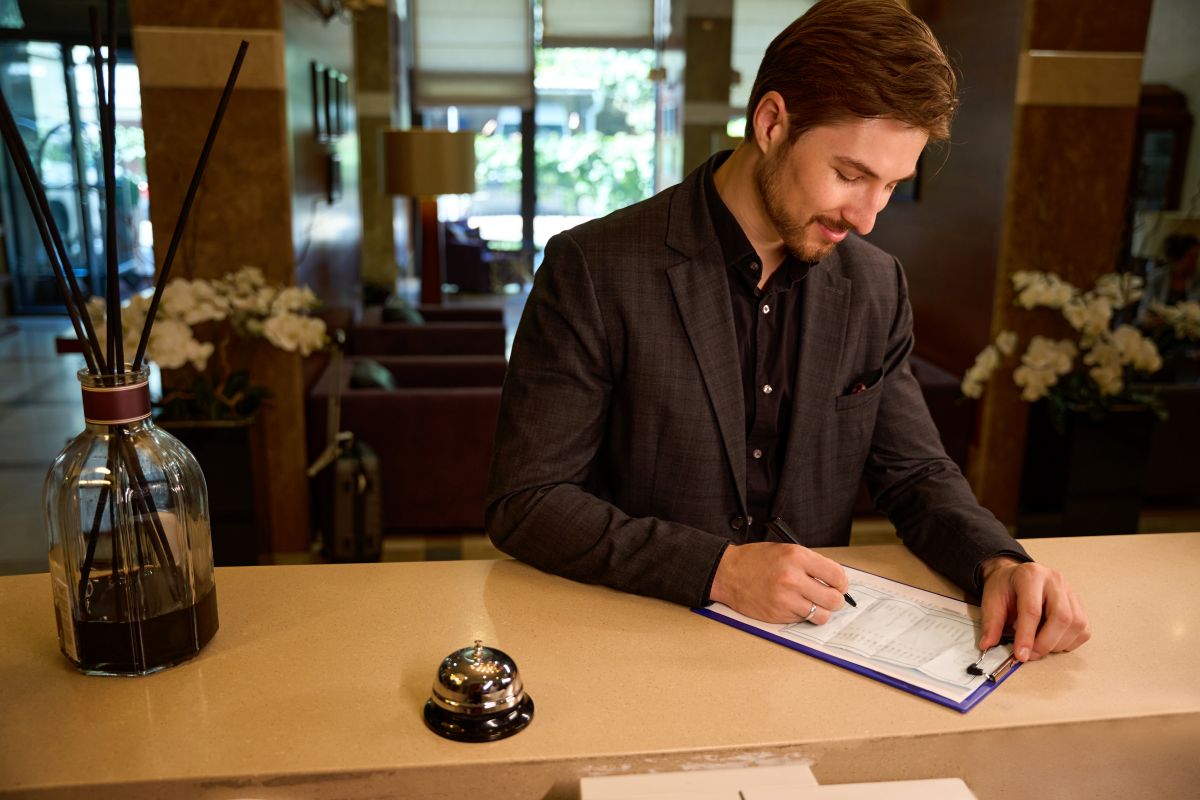
I’ve been working with hospitality brands long enough to know that guest loyalty doesn’t happen by accident. It’s built interaction by interaction, touchpoint by touchpoint, and it can unravel just as fast. What I keep seeing is that the hotels winning at retention aren’t necessarily the ones with the fanciest lobbies or the most amenities. They’re the ones that have figured out how to innovate around the service experience itself.
That’s what I want to dig into here: what service innovation actually looks like in practice, why it matters more than ever for guest loyalty, and how operators can start making moves that translate into real, measurable retention.
- Why Service Innovation Has Become Central to Building Guest Loyalty
- How Personalization Is Redefining the Guest Loyalty Experience
- The Role of Consistent, High-Quality Support in Retaining Guests
- Service Innovation Across the Full Guest Journey
- Practical Moves to Strengthen Guest Loyalty Through Better Service Design
- Explore More Strategies for Guest Experience Excellence
Why Service Innovation Has Become Central to Building Guest Loyalty
The hospitality landscape has shifted significantly in the last few years. Guests have more choices, higher expectations, and less patience for experiences that feel generic or transactional. Loyalty programs alone are no longer enough to keep guests coming back. Points and perks can be matched by any competitor. What can’t be easily replicated is how a guest feels when they interact with your brand at every stage of their journey.
A 2025 study on service quality dimensions and their impact on guest loyalty in hotels found that reliability, responsiveness, and empathy were the factors most consistently tied to repeat visit intent, with guests describing service failures in these areas as the primary reason they stopped returning to a property. The takeaway is straightforward: innovation in service delivery has to start with the fundamentals, not on top of them.
That said, the way those fundamentals are delivered is changing fast, and operators who aren’t evolving are losing ground.
How Personalization Is Redefining the Guest Loyalty Experience
One of the biggest shifts I’ve seen is the move from generalized hospitality to genuinely personalized service. Guests want to feel like they’re known, not just processed. Personalization has gone from being a differentiator to being an expectation, especially among frequent travelers and younger demographics.
This doesn’t always mean high-tech solutions. Sometimes it’s as simple as having front desk staff acknowledge a returning guest by name, or making sure that a guest’s preference for a high-floor room is flagged in your CRM before they even ask. But technology is also playing a huge role. Hotels that are using guest data effectively, whether through their PMS, loyalty app, or post-stay surveys, are able to anticipate needs in ways that feel genuinely thoughtful.
The numbers back this up. The 2024 Lodging Technology Study by Hospitality Technology, which surveyed over 10,000 properties worldwide, found that driving guest loyalty ranked as the number one technology priority for hotel operators, with 80% of respondents marking it as very or extremely important. That’s not a coincidence. It reflects a growing industry consensus that loyalty is built through experience, and experience is increasingly shaped by how well you use data.

The Role of Consistent, High-Quality Support in Retaining Guests
Here’s something I think gets undervalued in conversations about service innovation: the support experience is where loyalty is won or lost, more often than anywhere else. A guest might love your property’s design and your restaurant’s food, but if their billing issue goes unresolved for three days or their 2 AM noise complaint gets a cold response, that’s the story they tell.
Service innovation in support means building systems that are fast, available, and empowered to actually resolve problems. It means training agents not just on scripts, but on how to read a frustrated guest and de-escalate with empathy. And it increasingly means leveraging outsourced partners who specialize in hospitality interactions, so your coverage gaps during peak hours or high-volume seasons don’t become loyalty killers.
If your team is constantly dealing with customer support bottlenecks during busy periods, that’s not just an operational headache. It’s a direct threat to your retention numbers.
For hospitality brands exploring scalable, high-quality support options, call centers in Tijuana Mexico have become a genuinely compelling option, offering nearshore talent with strong cultural alignment to North American guests, multilingual capability, and significantly lower overhead than domestic alternatives.
Service Innovation Across the Full Guest Journey
Loyalty isn’t built at checkout. It’s built across every single touchpoint, from the first search query to the post-stay email. That means service innovation has to be applied holistically, not just in one department or one channel.
Here’s how I think about the journey in terms of innovation opportunities:
Pre-arrival. This is where personalization can shine early. Automated but genuinely useful pre-arrival communication, room preference confirmations, local recommendations tailored to the guest’s past stays, these things set a tone that signals “we know you and we’re ready for you.”
During the stay. Speed and empowerment matter here. Guests shouldn’t have to call the front desk three times to get a broken TV fixed. Giving your support teams, whether in-house or outsourced, the authority and tools to resolve issues on first contact is a game-changer for satisfaction scores.
Post-stay. This is where most hotels leave money on the table. A thoughtful follow-up, a direct response to a negative review, or a personalized offer based on the guest’s stay history can turn a one-time visitor into a loyal advocate. This stage is often under-resourced, and it shows.
Practical Moves to Strengthen Guest Loyalty Through Better Service Design
If you’re looking to make tangible progress on guest loyalty through service innovation, here’s where I’d focus:
- Audit your touchpoints for friction. Where are guests experiencing delays, confusion, or inconsistency? Those are your highest-priority areas for innovation. You can’t fix what you’re not measuring.
- Invest in training that goes beyond scripts. Empathy, active listening, and problem ownership aren’t soft skills. They’re loyalty drivers. Your support teams need regular coaching on these, not just onboarding coverage.
- Use post-stay feedback structurally. Not just to track NPS, but to identify recurring patterns and brief your teams on them. If ten guests mention the same issue in the same month, that’s a training and process opportunity, not just a data point.
- Build in service recovery protocols. Things will go wrong. What distinguishes loyal-guest-generating properties is how they respond when they do. Fast, genuine, and empowered recovery turns a frustrated guest into one of your biggest advocates.
Explore More Strategies for Guest Experience Excellence
If this got you thinking about where your operation has room to grow, there’s a lot more practical content waiting for you over at The Customer Experience Lab. We publish regularly on BPO strategy, nearshore operations, and customer experience design, all with a focus on real-world application, not just theory.
Whether you’re managing one property or overseeing support for a multi-brand portfolio, the insights there are built for operators who want to move fast and think clearly. Take a look and stay a while.
FAQ: Guest Loyalty and Service Innovation
1. What is the most effective way to build guest loyalty in hospitality?
Consistency and personalization are the two biggest drivers. Guests return to properties where they feel known and where their expectations are reliably met, especially when something goes wrong and the recovery is handled well.
2. How does service innovation differ from simply adding new amenities?
Service innovation focuses on how experiences are delivered, not just what is offered. It involves improving responsiveness, personalization, and consistency across every touchpoint, areas that directly influence whether a guest comes back.
3. Can outsourcing support operations actually improve guest loyalty?
Yes, when done right. An outsourced partner with hospitality-specific training and 24/7 coverage can close the gaps that in-house teams struggle to fill, leading to faster resolution times and better overall guest satisfaction.
4. How important is post-stay communication for retaining guests?
It’s significantly underutilized and highly effective. A personalized follow-up or a direct response to a review signals that the property values the guest beyond their checkout date, which is a meaningful driver of return intent.
5. What metrics should I track to measure guest loyalty improvement?
Net Promoter Score (NPS), repeat booking rate, post-stay survey scores, and online review trends are the most actionable. Track them over time and segment by touchpoint to identify where service improvements are having the most impact.